2025 Competition Results
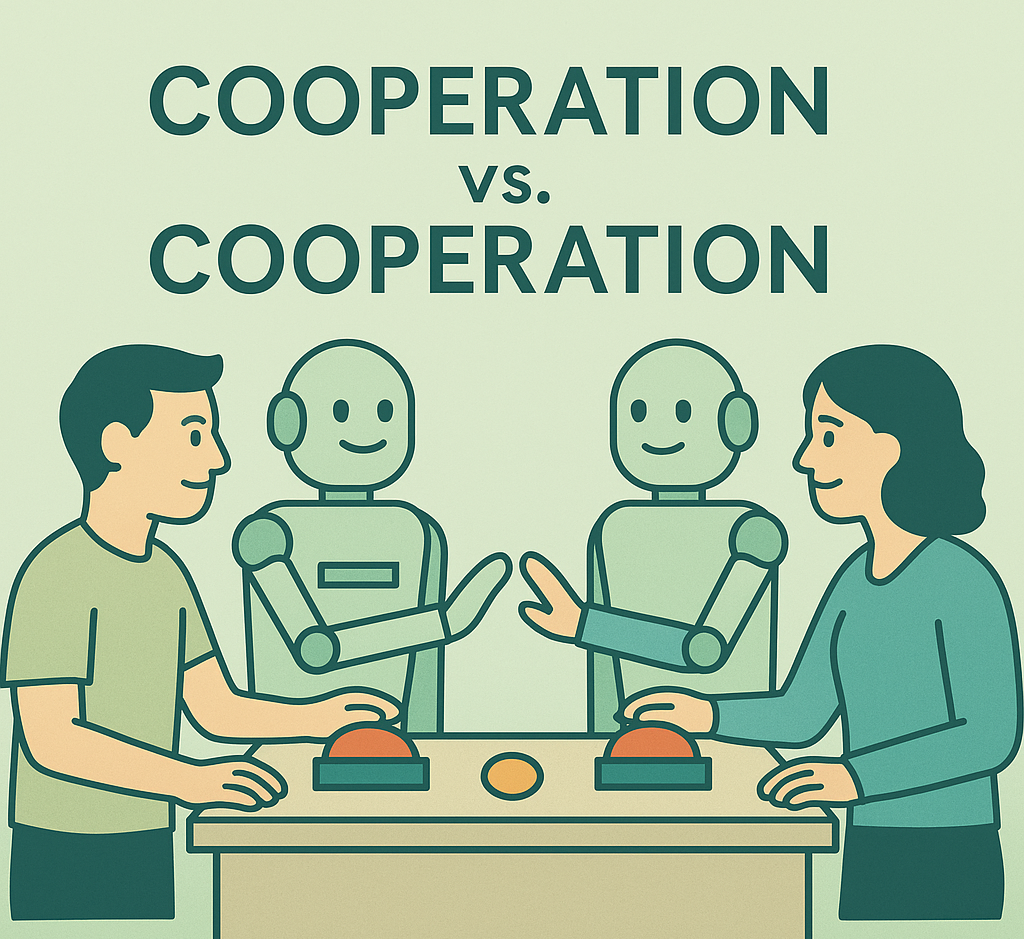
QANTA 2025 featured in-person and online Human-AI cooperative play, plus an AI systems leaderboard and adversarial packet writing.
Highlights
- June 14 (in-person) winner: Sara’s Cias
- June 21 (online) winner: QB They Reader
- Top AI system: BlackRaven (Jaimie Carlson)
- Most adversarial packet prize: Stephen Pachucki
Stats Reports
- In-Person: QANTA_2025_Stats_June_14
- Online: QANTA_2025_Stats_June_21
- AI (combined): QANTA_2025_AI_Stats_Combined
These reports include player-level and team-level performance, AI contribution/trust metrics on bonuses, and per-packet analysis.
Winners and Prize Money
June 14, 2025 - Human Teams
- Sara’s Cias (Team 3) - $150
Sara DelVillano, Warren Grace, Haughton Neppl - Kicking and Screaming (Team 5) - $100
Irene Ying, Michael - Inquizitive (Team 1) - $50
Kartik Ravisankar
June 21, 2025 - Human Teams
- QB They Reader (Team 2) - $150
Mohit Nair, Nate Brown, Angelo Pan - Dot Gimpel the File (Team 4) - $100
Ankit Aggarwal, Nikhil Desai, Sinecio Morales - Cinco Ranch Education (Team 1) - $50
Alan Lee, Anthony Yin, Ruchir Kodihalli
AI Builders (Combined)
- BlackRaven (Jaimie Carlson) - $200
- RodeRunner (Neel Mokaria) - $150
- Tigerclaw (Amanvir Parhar) - $100
- Sphinx (Parth Dua, Marek Suppa) - $50
Packet Writers
Most adversarial question sets by packet-level analysis:
- Packet 3: Noah Sheidlower (Music)
- Packet 5: Jaimie Carlson (Spatial Reasoning)
- Packet 7: Jordan Boyd-Graber (house-written; not prize eligible)
House-written packets were not eligible for writer prize payouts. The writing prize was awarded to Stephen Pachucki ($50).
Most Adversarial Questions (Examples)
Example 1: Rapper identity with decoy clues
A question with clues intentionally pointing toward nearby entities (e.g., Nas, Kanye West, Machiavelli, Tupac aliases) remained answerable for strong humans while triggering wrong high-confidence AI guesses.
Outcome:
- Humans successfully resolved the intended entity from the full clue chain.
- AI systems were frequently misled by early local associations.
Example 2: Composer identification under musical detail
A music question referencing specific rhythmic and thematic motifs from multiple works by Clara Schumann created strong discrimination.
Outcome:
- Humans were often cautious and waited.
- AI systems produced confident wrong guesses (e.g., Franz Liszt, Frederic Chopin).
Example 3: Magritte visual clue integration
A multimodal art question integrating textual clues and visual object references (“This is not …”, bowler hat imagery, and Magritte works) required compositional reasoning.
Outcome:
- Humans often converged to apple midway through the question.
- Multiple AI systems converged on incorrect alternatives (e.g., skull).
AI-Misled Human Cases
The 2025 format allowed direct measurement of when AI suggestions shifted human teams from correct reasoning paths to incorrect final answers.
Case A: Bruegel bonus (Peasant Wedding)
- Gold answer: bowls
- AI suggestions included: loaves of bread, pies
- Human teams were considering pies; confident AI guesses pushed final answers further away from the gold answer.
Case B: Capital-city proximity bonus
- Gold answer: Luxembourg City
- AI suggestions included: Bonn, Brussels
- Teams that had discussed Luxembourg were pulled toward AI-suggested alternatives.
Acknowledgments
Thanks to Eve Fleisig, Yu Hou, Maharshi Gor, Yoo Yeon Sung, Noah Sheidlower, and all participating writers, players, and system designers.
Related Pages
Contact
If a stats link appears broken or a result looks incorrect, contact .